Agni-V
The long reach of India's nuclear deterrent.
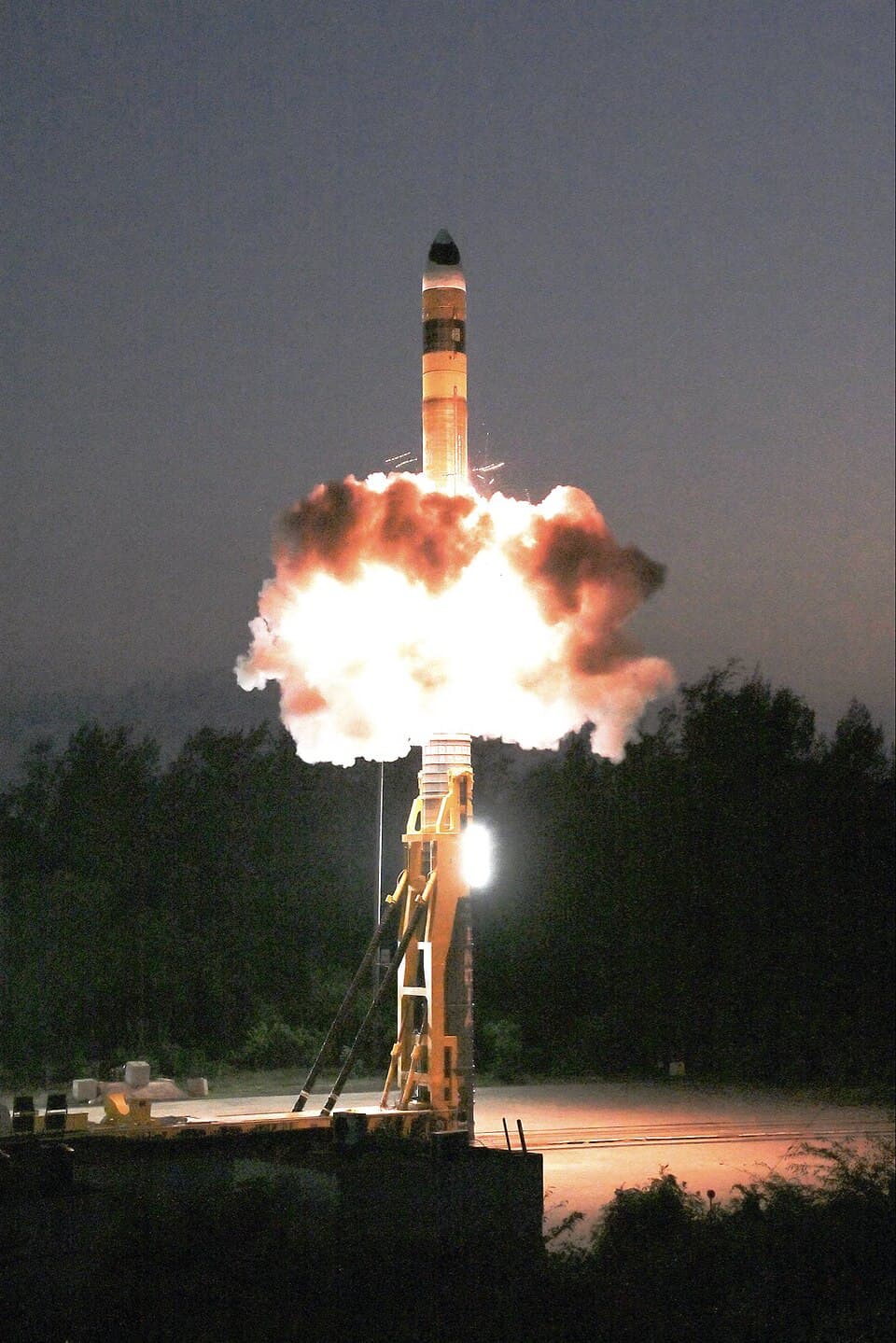
About the Agni-V
Agni-V is a land based nuclear MIRV-capable intermediate-range ballistic missile (IRBM) developed by the Defence Research and Development Organisation (DRDO) of India. Although the missile is officially classified as an "IRBM" with a range in excess of 5,500 kilometres (3,400 mi), experts estimate it to be an intercontinental ballistic missile (ICBM) with a range of 8,000 km (5,000 mi). It is a three-stage, road-mobile, canisterised and solid-fueled ballistic missile.
Service history
Agni-V first flew in 2012 and gave India intercontinental reach for the first time. It is canisterised for road and rail mobility, which cuts launch preparation to minutes and makes the deterrent survivable. A 2024 test demonstrated multiple independently targetable re-entry vehicles under Mission Divyastra. It is operated by the tri-service Strategic Forces Command rather than the Army directly.
Combat edge
Three-stage solid-fuel design with 5,000+ km reach
Canisterised for rapid, mobile launch
MIRV capability demonstrated in 2024
Held by the tri-service Strategic Forces Command
Related platforms
Agni-Prime
Two-stage, surface to surface, canister-launched.
Agni-I
Short-range ballistic missile that was developed by DRDO of India in the Integrated Guided Missile.
Agni-II
Second strategic ballistic missile of the Agni family envisaged to be the mainstay of the Indian.